
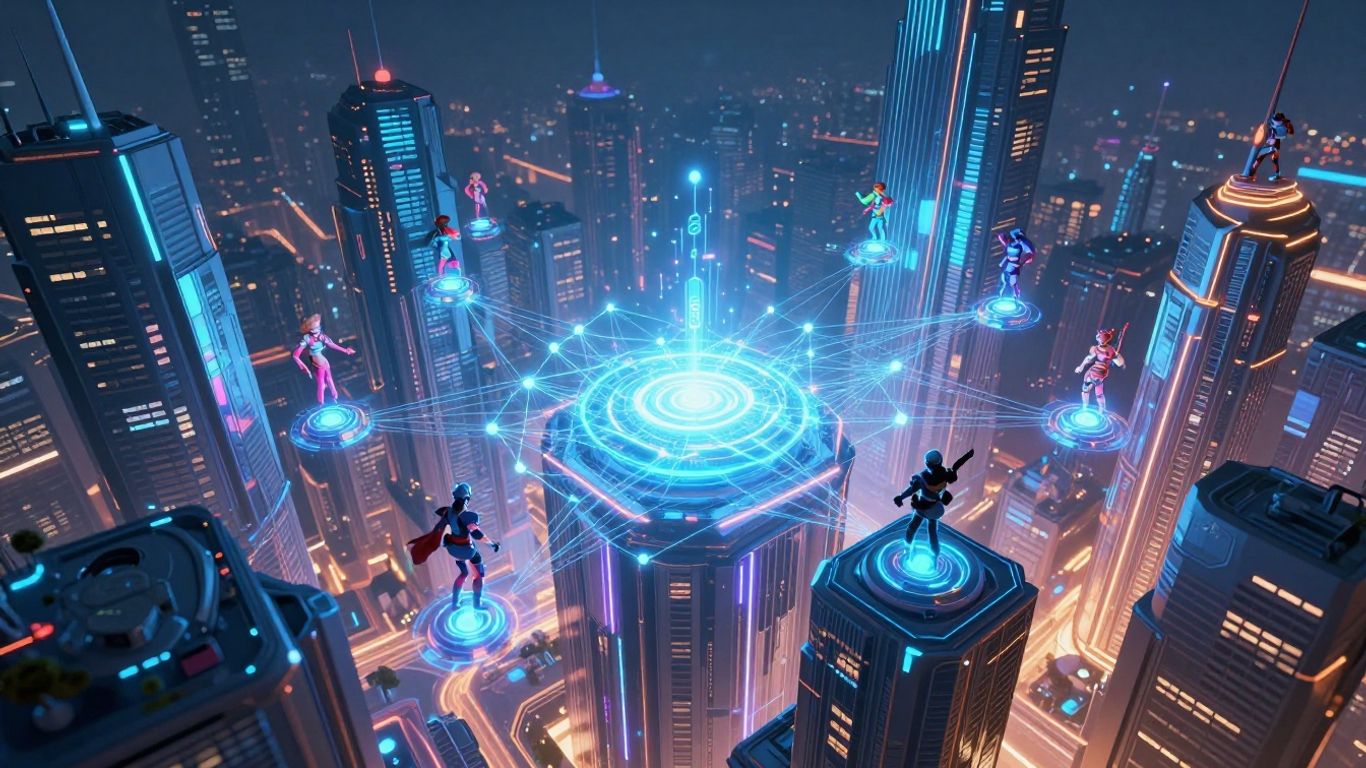
The blockchain gaming industry is witnessing a significant evolution in 2026, with the global NFT gaming market projected to reach $7.63 billion. Driven by advancements in Ethereum layer-2 scaling solutions and innovative play-to-earn models, the ecosystem is shifting from speculative assets to robust, player-owned infrastructure that prioritizes sustainable gameplay and long-term user engagement.
Key takeaways
- The NFT gaming market is expected to reach a valuation of $7.63 billion by the end of 2026.
- Layer-2 scaling solutions, such as Immutable X and Base, have reduced transaction costs by up to 90%.
- True ownership of in-game assets through NFTs is now a foundational element of game mechanics rather than just a speculative feature.
- Strategic gameplay and balanced tokenomics are essential for the long-term sustainability of Web3 gaming projects.
The impact of layer-2 scaling
Before recent Ethereum upgrades, blockchain gaming was hindered by high gas fees, making microtransactions and frequent asset trading prohibitively expensive. The introduction of EIP-4844 and subsequent network upgrades have fundamentally changed this landscape. By utilizing blob-carrying transactions, layer-2 networks can now process data more efficiently, leading to a dramatic reduction in transaction costs. This technical breakthrough has enabled developers to create smoother, real-time gaming experiences that were previously untenable.
| Network | Primary Technology | Key Benefit |
|---|---|---|
| Immutable X | ZK-Rollups | Gas-free minting and trading |
| Base | Optimistic Rollups | High-speed, low-cost transactions |
| Arbitrum | Optimistic Rollups | Scalable infrastructure for dApps |
Top play-to-earn titles to watch
Several titles currently lead the market by integrating blockchain technology into immersive gameplay. These games allow players to earn digital assets while engaging in strategic battles, exploration, or creative building. The following table highlights some of the most prominent projects in the space:
- Axie Infinity: A pioneer in the breeding and battle genre, allowing players to own unique digital pets.
- Illuvium: An open-world RPG that combines creature collection with strategic auto-battling mechanics.
- The Sandbox: A decentralized metaverse where users can create, own, and monetize their own virtual experiences.
- Gods Unchained: A competitive trading card game that emphasizes true NFT ownership for every collectible card.
Risks and considerations for participants
While the potential for financial rewards is a major draw, the blockchain gaming sector carries inherent risks. Token prices often fluctuate based on market sentiment rather than actual gameplay quality, and many projects struggle with player retention once initial hype cycles fade. Furthermore, the prevalence of scam tokens and potential smart-contract vulnerabilities require users to exercise caution. Before investing time or capital, players should evaluate the utility of in-game assets, the transparency of the developer team, and the overall health of the game’s economy. Treating these platforms as entertainment first, rather than purely as investment vehicles, is the most prudent approach for newcomers.
Leave a Reply