
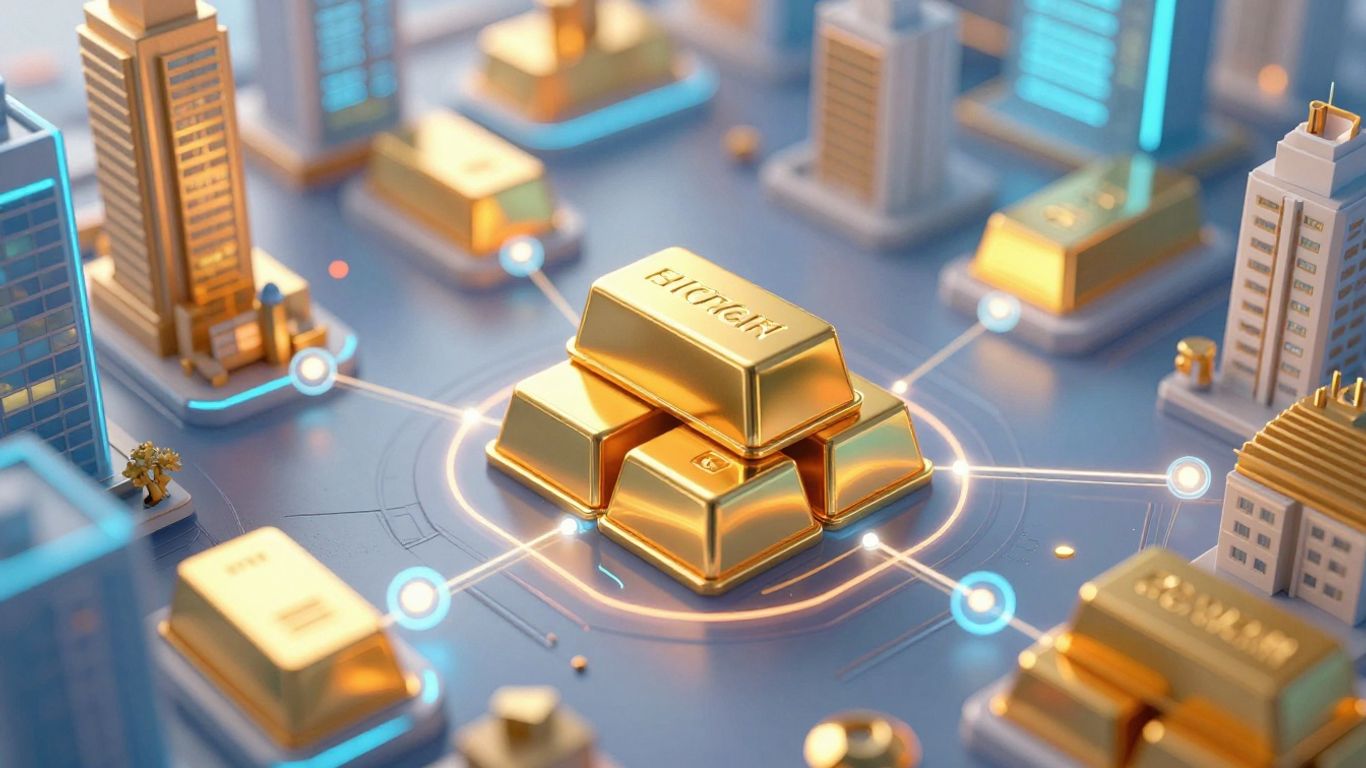
The world of investing is changing, and fast. You might have heard about things like Bitcoin and Ethereum, but there’s a whole other side to crypto that’s connecting with the stuff we already know, like stocks and real estate. We’re talking about Real World Assets, or RWAs, and by 2026, they’re set to become a big deal. This guide is for anyone curious about how everyday things can become digital investments, making them easier to buy, sell, and own. Think of it as a simple way to understand how real-world assets blockchain technology is changing the game for tokenized assets, and how RWA tokens are bridging traditional finance and crypto.
Key Takeaways
- Real-world assets (RWAs) are physical or financial items that are turned into digital tokens on a blockchain. This makes them easier to trade and own.
- The process, called tokenization, bridges the gap between old-school finance and new-world crypto. RWA tokens represent claims on these actual assets.
- By 2026, expect to see more tokenized versions of things like U.S. Treasuries, private loans, real estate, and even gold. This opens up investing to more people.
- Benefits include making investments more liquid (easier to sell), more accessible (you can buy small pieces), and more transparent.
- Challenges like different rules in different places and making sure everything is secure still need work, but the trend is growing.
Understanding Real World Assets in Crypto 2026
So, what exactly are we talking about when we say "Real World Assets" or RWA in the crypto world? It sounds a bit fancy, but at its heart, it’s pretty straightforward. Think about all the stuff you own or that has value in the physical world – your house, your car, maybe even that rare comic book collection. Now, imagine turning the ownership of that stuff into digital tokens that can live on a blockchain. That’s basically RWA tokenization.
Defining Real World Assets and Tokenization
Real World Assets are exactly what they sound like: tangible things or even intangible rights that exist outside of the digital blockchain space. This could be anything from a U.S. Treasury bond to a piece of commercial real estate, or even a share in a private company. Tokenization is the process of taking that ownership right and representing it as a digital token on a blockchain. It’s like creating a digital certificate of ownership that can be easily managed and traded. This process is fundamentally changing how we think about investing by making traditionally illiquid assets more accessible. As of early 2026, the market for tokenized assets on public blockchains has already hit around $29 billion, showing significant growth.
The Bridge Between Traditional Finance and Blockchain
For a long time, the world of traditional finance (think banks, stock markets) and the world of crypto (like Bitcoin and Ethereum) have been pretty separate. RWAs are acting like a super important bridge between these two worlds. They take assets that people are already familiar with and comfortable owning in the traditional system and bring them into the blockchain ecosystem. This means you could potentially own a piece of a U.S. Treasury bond, which is super safe, but do it through a blockchain platform. This connection is opening up new ways for both traditional institutions and everyday investors to interact with digital finance. It’s a big deal for making crypto less abstract and more grounded in things we already understand.
Key Differences: RWA vs. Crypto-Native Tokens
It’s important to know that RWAs are different from your typical cryptocurrencies like Bitcoin or Ether. Those are what we call "crypto-native" tokens – they exist purely on the blockchain and their value isn’t directly tied to a physical asset. Bitcoin, for example, isn’t backed by gold or any specific physical item. RWAs, on the other hand, are backed by something real in the physical world. This backing gives them a different kind of stability and a different risk profile compared to purely digital assets. Think of it this way:
- Crypto-Native Tokens: Like digital gold (Bitcoin) or a digital utility (Ether). Their value is driven by network effects, adoption, and market sentiment.
- Real World Assets (RWAs): Like a digital share of a building or a digital bond. Their value is directly linked to the underlying physical asset or financial instrument.
The integration of real-world assets onto blockchains isn’t just about making existing assets digital; it’s about reimagining how ownership, transfer, and investment can occur in a more efficient and open financial system. This shift is supported by evolving regulations and increasing institutional interest, signaling a move towards a more unified financial landscape. Tokenization is at the forefront of this transformation.
This difference is pretty significant for investors trying to figure out where they want to put their money. RWAs offer a way to get exposure to traditional asset classes with the potential benefits of blockchain technology, like faster transactions and fractional ownership. It’s a whole new ballgame for investing, and it’s happening right now.
The Mechanics of RWA Tokenization Explained
So, how does all this magic happen? Turning something as solid as a building or a bond into a digital token might sound complicated, but it’s actually a pretty structured process. Think of it like taking a physical object and creating a digital certificate for it that lives on the blockchain. This digital certificate represents ownership and rights to the real-world asset.
Here’s a breakdown of the typical steps involved:
- Asset Selection and Legal Wrapping: First, an asset is chosen – maybe it’s a piece of real estate, a collection of loans, or even gold. Then, it needs a legal structure. This often involves setting up a Special Purpose Vehicle (SPV) or a trust. This legal entity formally owns the asset, and its ownership is what gets represented by the tokens. It’s like putting the asset in a secure box before you make digital copies of the key.
- Smart Contract Development: Next, developers write smart contracts. These are self-executing contracts with the terms of the agreement directly written into code. They live on a blockchain, like Ethereum or Polygon. These contracts define everything: how many tokens will represent the asset, what rights token holders have (like receiving income or voting), and any rules they need to follow. It’s important that these contracts are thoroughly checked for any bugs or security flaws.
- Token Issuance and Distribution: Once the smart contracts are ready, the tokens are created, or ‘minted’. This usually happens after verifying that the underlying asset actually exists and is accounted for (a ‘Proof of Reserve’). Then, these tokens are distributed to investors. To make sure everything is above board, investors typically have to go through ‘Know Your Customer’ (KYC) and ‘Anti-Money Laundering’ (AML) checks. This helps prevent fraud and keeps things compliant with financial regulations. You can find platforms that help with this whole process, making it easier to get your assets tokenized on regulated exchanges.
- Secondary Market Trading and Income Distribution: After the tokens are in investors’ hands, they can often be traded on secondary markets. This is where the blockchain really shines, allowing for faster and more accessible trading than traditional markets. Plus, if the asset generates income – like rent from a property or interest from a bond – the smart contracts can automatically distribute these payments directly to the token holders’ digital wallets. No more waiting for checks in the mail!
The whole point of this process is to make traditional assets more accessible and easier to manage. By breaking down large, illiquid assets into smaller, digital pieces, more people can invest, and existing owners can get more flexibility with their holdings. It’s about bridging the gap between the physical world and the digital economy.
It’s not always a walk in the park, though. Things like making sure the tokens on one blockchain can talk to tokens on another (interoperability) and keeping the physical assets safe are big deals. But the technology is improving, and more people are figuring out how to make it work smoothly.
Dominant Real World Asset Classes in 2026
By early 2026, the landscape of tokenized real-world assets (RWAs) has really diversified. It’s not just one thing anymore; it’s a whole ecosystem with several major players. The total value of tokenized assets on public blockchains has seen some serious growth, hitting around $29 billion by April 2026. This shows that people are really starting to see the value in bringing tangible assets onto the blockchain.
Tokenized U.S. Treasuries and Fixed Income
This sector has become a go-to for many, often seen as the digital equivalent of a risk-free investment. By April 2026, tokenized Treasuries alone were valued at about $13.4 billion. Big names like BlackRock, with its BUIDL fund, Circle, and Ondo are leading the charge here. A pretty big deal happened in early 2026 when BlackRock’s BUIDL fund started being used on decentralized finance (DeFi) platforms like Uniswap. This was a first, allowing a regulated fund to act as collateral in these decentralized lending systems.
Private Credit and Structured Finance Markets
Private credit is another big one, holding its spot as the second-largest tokenized asset class with a value of $16.8 billion. This area is particularly useful for making it easier to lend to small and medium-sized businesses and for revenue-based financing, which have historically been quite illiquid. It’s a significant part of the overall tokenized RWA market.
Commodities and Precious Metals Tokenization
While maybe not as large as Treasuries or private credit, tokenizing commodities and precious metals is definitely gaining steam. Think gold, silver, or even energy resources. Representing these physical goods as digital tokens makes them much easier to trade and manage, especially for investors who want exposure without the hassle of storing the physical items. This opens up markets that were previously harder to access for many.
Real Estate and Collectibles on the Blockchain
Real estate tokenization has a lot of appeal, especially for individuals. It allows for fractional ownership, meaning you can buy a small piece of a property instead of needing a huge sum to purchase it outright. This dramatically improves liquidity for property owners and makes real estate investing more accessible. We’re seeing projects tokenizing everything from commercial buildings to luxury homes. Collectibles, like art or rare items, are also finding a place on the blockchain, making their ownership and authenticity easier to track and trade. The projected growth of tokenized real-world assets is quite impressive, aiming to decipher the underlying figures behind the headline expansion expected by 2026 [21f8].
The ability to break down large, illiquid assets into smaller, tradable digital tokens is fundamentally changing investment accessibility. This fractionalization is key to democratizing markets that were once exclusive.
Here’s a quick look at how some of these classes are performing:
- Tokenized Treasuries: Valued at over $13 billion, offering stable yields.
- Private Credit: Reached $16.8 billion, improving SME lending.
- Real Estate: Growing interest, enabling fractional ownership.
- Commodities: Increasing tradeability for physical goods.
- Collectibles: Easier ownership and authenticity verification.
Benefits of Tokenized Investments
So, why are people getting so excited about tokenizing real-world assets? It really boils down to making things easier and more open for everyone involved. Think about it: instead of dealing with a bunch of paperwork and waiting around for days, everything can happen much faster and with more clarity. This shift is fundamentally changing how we think about investing.
One of the biggest wins is making investments accessible to more people. Traditionally, some assets, like prime real estate or certain investment funds, had really high minimums. Tokenization breaks these down. You can now buy a small piece of something valuable, something you might never have been able to afford otherwise. This is called fractional ownership, and it’s a game-changer for building wealth.
Here’s a quick look at what that means:
- Lower Entry Barriers: You don’t need a massive pile of cash to get started. Smaller investment amounts mean more people can participate.
- Wider Asset Choice: Access to things like private credit or even fine art becomes possible for a broader audience.
- Global Reach: Geographic limits start to fade away, letting you invest in opportunities worldwide.
Beyond just getting in the door, tokenization makes the whole process smoother. Imagine buying or selling an asset. Instead of a complicated back-and-forth with banks and lawyers, a lot of that can be handled automatically by smart contracts on the blockchain. This means faster settlements and fewer chances for errors. It’s like upgrading from a flip phone to a smartphone for your investments.
The transparency that comes with blockchain is a big deal too. Every transaction is recorded and can be seen by authorized parties. This makes it harder for shady stuff to happen and gives everyone a clearer picture of what’s going on with their investment. It builds trust, which is pretty important when you’re putting your money somewhere.
This improved efficiency and transparency can lead to better pricing and reduced costs over time. It’s not just about convenience; it’s about creating a more robust and fair market for everyone. The potential for asset tokenization to reshape capital markets is huge, and we’re only just starting to see its impact.
Navigating Challenges in the RWA Landscape
While the promise of tokenized real-world assets (RWAs) is huge, it’s not all smooth sailing. There are definitely some bumps in the road that folks are working through. Think of it like trying to build a new highway system – you’ve got the vision, but the actual construction involves a lot of planning, permits, and dealing with unexpected issues.
Regulatory Fragmentation and Clarity
One of the biggest headaches right now is the patchwork of rules. Different countries, and sometimes even different states within a country, have their own ideas about how tokenized assets should be handled. This makes it tough for companies operating across borders. Getting clear, consistent regulations is key for widespread adoption. It’s like trying to play a game where the rules keep changing depending on which room you’re in.
Custody, Safekeeping, and Security Concerns
When you tokenize an asset, you need a secure way to hold onto both the physical asset and its digital representation. This involves figuring out who’s responsible for safekeeping, how to prevent theft or loss, and what happens if a custodian goes bankrupt. It’s a complex area, especially when dealing with high-value items. The security risks associated with smart contracts and potential oracle failures also need constant attention to prevent value mismatches [d42a].
Addressing Adoption Gaps Through Education
Let’s be honest, a lot of people still don’t quite get how RWAs work. There’s a significant gap in understanding, both for potential investors and for the businesses that might want to issue tokenized assets. Bridging this gap requires a lot of clear communication and educational resources. Without it, people might be hesitant to jump in, even if the benefits are clear.
Technological Hurdles and Interoperability
We’re also seeing challenges with the technology itself. Different blockchains don’t always play nicely together, which can make moving assets around or using them across various platforms difficult. Think about trying to plug different types of electrical cords into the same outlet – it just doesn’t work without adapters. Improving interoperability between different blockchain networks is a major goal for the future.
The path forward for tokenized assets involves not just technological innovation but also a concerted effort to build trust through robust legal frameworks and clear operational procedures. Addressing these challenges head-on is what will ultimately determine the success and scale of RWA integration into the global financial system. Institutional risk assessment, for example, remains a significant hurdle for tokenizing assets in a market that is still quite fragmented [a7c4].
Here’s a quick look at some of the main issues:
- Regulatory Uncertainty: Rules vary wildly by jurisdiction.
- Security Risks: Protecting both digital tokens and underlying assets.
- Education Deficit: Many potential users lack understanding.
- Interoperability Issues: Blockchains need to communicate better.
- Custody Solutions: Finding reliable and secure ways to hold assets.
The Future Trajectory of RWA Crypto
Institutional Adoption and Market Growth Projections
It feels like just yesterday we were talking about RWAs as a niche concept, but now, it’s really hitting its stride. Big players on Wall Street are not just watching; they’re actively getting involved. Think about BlackRock, a company managing trillions, looking at tokenized assets. That kind of attention signals a massive shift. Projections are all over the place, but many see the market for tokenized assets hitting the tens of trillions within the next few years. We’re talking about a significant chunk of global wealth potentially moving onto the blockchain. This isn’t just about crypto enthusiasts anymore; it’s about traditional finance seeing the benefits of blockchain for efficiency and access. Crypto markets are set for significant growth in 2026, driven by clearer regulations and increased institutional adoption. This integration is expected to solidify crypto’s position within the broader financial landscape.
Emerging Asset Classes for Tokenization
While tokenized Treasuries and real estate have been the early stars, the real excitement is in what’s next. We’re seeing serious interest in tokenizing things like carbon credits, which could be a game-changer for environmental initiatives. Infrastructure projects, think toll roads or renewable energy farms, are also prime candidates. Even sports ownership, like fractional stakes in a team, is starting to appear. The idea is that anything with a verifiable value and ownership can eventually be represented on a blockchain. This opens up investment opportunities that were previously out of reach for most people.
Innovations Driving RWA Expansion
Several technological advancements are really pushing RWAs forward. For starters, things like zero-knowledge proofs are becoming more sophisticated, which helps with privacy and compliance – a big deal when you’re dealing with regulated assets. AI is also playing a role, especially in asset valuation and risk assessment, making the whole process more accurate and faster. And we can’t forget about multi-chain support. Having RWAs available on different blockchains, not just one, makes them more accessible and scalable. This interoperability is key to widespread adoption.
The move towards tokenizing real-world assets isn’t just a trend; it’s a fundamental reshaping of how we think about ownership and investment. It’s about making markets more open, efficient, and accessible to everyone, everywhere.
Here’s a look at some projected growth areas:
- Tokenized Treasuries: Expected to see continued strong growth due to stability and yield.
- Private Credit: Potential for significant expansion as it offers higher yields than traditional fixed income.
- Commodities: Increased interest in tokenized gold and other precious metals for diversification.
- Emerging Markets: Tokenization of assets in developing economies could provide much-needed capital and liquidity.
This year, expect advancements in stablecoin onramps and banks enabling new payment scenarios. The focus will shift towards more origination, particularly in areas like tokenization of real-world assets (RWA). This indicates a growing trend towards integrating traditional assets and financial processes with blockchain technology, paving the way for innovative financial applications and services.
Wrapping It Up: The Road Ahead for Tokenized Assets
So, we’ve covered a lot of ground on Real World Assets and tokenization. It’s pretty clear this isn’t just a passing trend; it’s shaping up to be a major part of how we invest in the coming years. We’re seeing big players get involved, and the technology is making it easier for more people to get a piece of things like real estate or even government bonds. Sure, there are still some hurdles to jump over, like making sure everyone understands the rules and how the tech actually works. But the potential for making investing more open and efficient is huge. Keep an eye on this space – it’s going to be interesting to see how it all plays out.
Frequently Asked Questions
What exactly are ‘Real World Assets’ in the crypto world?
Think of Real World Assets, or RWAs, as things you can touch or that have real value in the normal world – like a building, a piece of art, or even gold. In crypto, we make digital versions of these things, called tokens, that live on a blockchain. It’s like having a digital certificate for your real-world item that you can easily trade or share.
How does turning a real thing into a digital token work?
It’s like making a digital copy. First, someone checks and values the real asset, like a house. Then, lawyers make sure everything is legal. After that, special computer code called a smart contract creates digital tokens on a blockchain that represent parts of that asset. These tokens can then be bought and sold by people all over the world.
Why would anyone want to tokenize things like U.S. Treasury bonds?
Tokenizing things like U.S. Treasury bonds makes them easier for more people to buy and sell. Instead of needing a lot of money and going through complicated steps, you can buy a small piece of a bond as a token. This also makes them more available to trade 24/7, which is much faster than the old way.
What are the biggest benefits of using these tokenized assets?
The main advantages are making things easier to buy and sell (more liquidity), being able to own just a small piece of something expensive (fractional ownership), and having more clear records of who owns what (transparency). It also opens up investing to more people who might not have had the chance before.
Are there any downsides or risks to tokenized real-world assets?
Yes, there are challenges. Rules and laws for these tokens are still being figured out in different places, which can be confusing. Keeping the digital tokens safe is also important, and sometimes the technology isn’t perfectly connected between different systems. Educating people about how it all works is key too.
What does the future look like for tokenized real-world assets?
The future looks very bright! Big companies are getting more involved, and more types of assets, like movie rights or even things like carbon credits, will likely be turned into tokens. Experts think this market will grow a lot, making it easier for everyone to invest in a wider range of things using blockchain technology.
Leave a Reply