
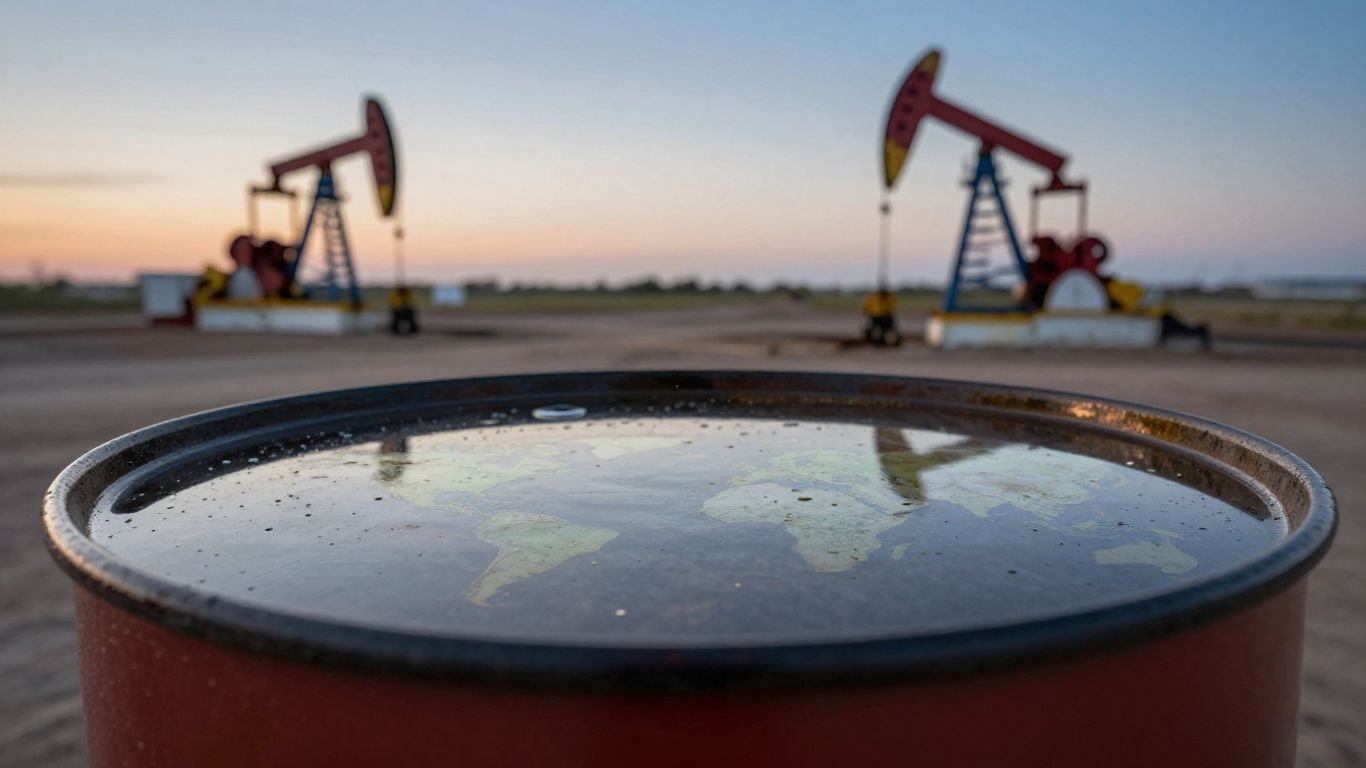
So, what’s happening with oil prices in April 2026? It’s been a wild ride, and things are still pretty uncertain. We saw prices jump way up after some big events, but now there are different ideas about where they’ll end up. Some experts think they’ll come down, while others see them staying high because of ongoing issues. Let’s break down what’s going on.
Key Takeaways
- J.P. Morgan predicts oil prices could average around $60/bbl in 2026, expecting supply to outpace demand despite potential production cuts.
- A conflict leading to the closure of the Strait of Hormuz dramatically shifted market expectations, causing supply shortages and supporting higher prices, with Goldman Sachs forecasting higher averages than previously thought.
- Crude oil prices saw a big jump in early 2026, especially after Middle East conflict, with Brent crude reaching over $100/bbl due to production shut-ins and transit risks.
- While bunker prices have dropped from their highest points, they remain significantly higher than before the recent market turmoil, reflecting a re-balancing of global oil supplies.
- Gasoline and diesel prices increased sharply in early 2026 due to higher crude costs and supply disruptions, with distillates and jet fuel seeing even bigger price hikes.
Forecasting Oil Prices April 2026 Amidst Market Shifts
Well, April 2026 is shaping up to be a real head-scratcher for oil prices. Things have been pretty wild, and trying to pin down where things are headed feels like trying to catch smoke. We’ve seen some big swings, and honestly, it’s hard to know what to expect from one week to the next. The whole situation in the Middle East has really thrown a wrench into everything, making even the experts scratch their heads.
J.P. Morgan’s Bearish Outlook for 2026
J.P. Morgan’s team put out a forecast that’s got a lot of people talking, and it’s not exactly cheerful. They’re looking at Brent crude averaging around $60 a barrel for 2026. This isn’t just a random guess; it’s based on what they see as a softening in the basic supply and demand picture. Even though demand is expected to grow a bit, supply is predicted to grow even faster. They’re saying we’ll likely see surpluses, which means production cuts might be necessary just to keep inventories from getting out of hand. It’s a bit of a downer, but they seem pretty confident in their numbers.
Supply Surpluses and Production Cut Necessities
It looks like the market might be heading towards a situation with more oil available than we actually need. This isn’t a new problem, but it seems to be getting more attention now. If these surpluses do show up, especially in the latter half of the year, producers will probably have to step in and cut back on how much they’re pumping. It’s a way to keep prices from crashing completely. Think of it like a thermostat for the market – if it gets too hot (too much supply), they turn down the heat (cut production).
The global oil market is a complex beast, and right now, it feels like it’s being pulled in a few different directions at once. Geopolitical events are a huge factor, but so are the underlying numbers of how much oil is being produced versus how much is being used. It’s a constant push and pull.
Impact of Demand Growth on Oil Prices
Even with all the talk of surpluses, we can’t forget about demand. While the growth might not be explosive, it’s still there. We’re seeing global oil demand projected to expand, though maybe not as much as some hoped. This demand, even if it’s moderate, does play a role in keeping prices from falling too far. It’s one of the key pieces of the puzzle that analysts are watching closely. The global oil demand outlook is a big part of this equation.
Geopolitical Tensions and Their Influence on Oil Markets
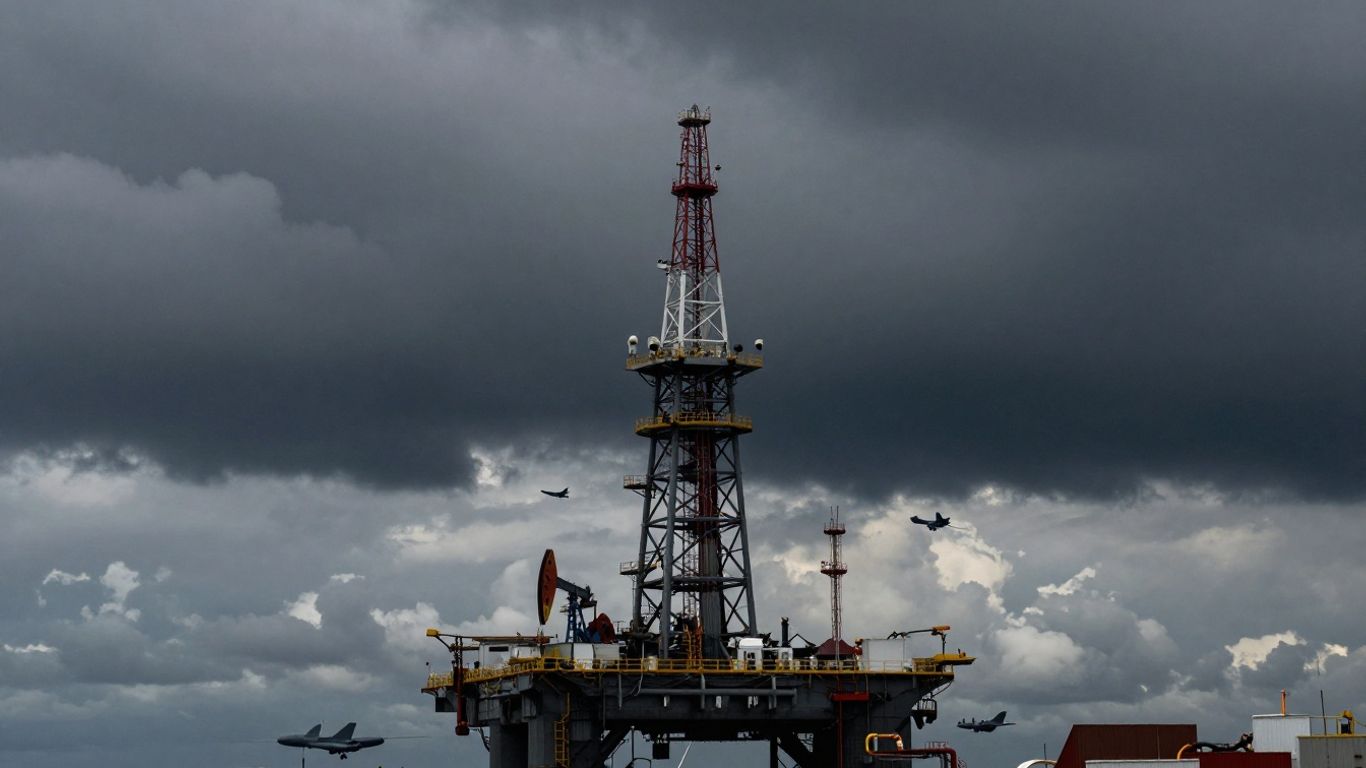
Well, things got pretty wild in the oil markets early this year, and a lot of it boils down to what’s happening in the world. It’s not just about supply and demand numbers; sometimes, a conflict halfway across the globe can really shake things up. We saw this happen firsthand after some military action in the Middle East kicked off in late February.
The Strait of Hormuz Closure and Its Ramifications
This event was a big deal. Suddenly, a major shipping lane, the Strait of Hormuz, became a no-go zone. Think about it – a huge amount of the world’s oil passes through there. When traffic stopped, it was like slamming the brakes on a lot of oil getting to where it needed to go. Before this, everyone was expecting oil stockpiles to grow and grow, but that all changed in an instant. Now, instead of a build-up, we’re looking at a significant draw-down in supplies. Even if things calm down and the Strait reopens, the market is going to feel tighter for a while because of the lingering worries.
Goldman Sachs’ Price Forecasts and Alternative Scenarios
Big financial players like Goldman Sachs had to rethink their predictions pretty quickly. Their initial forecast for Brent crude was around $83 a barrel, assuming things would get back to normal by mid-May. But they also cooked up a scarier scenario. If the Strait stays closed longer and we lose about 2 million barrels of oil supply each day, they’re talking about Brent prices hitting $115 to $120 a barrel in the latter half of the year. Some folks are even saying prices could shoot up to $150 if the blockade drags on. It just goes to show how sensitive these markets are to disruptions. It’s a stark contrast to the industry-wide forecasts of $52–60/bbl for 2026 made just last October, before these events unfolded. This whole situation has definitely shifted the energy commodity markets significantly.
Sustained Supply Shortages and Price Support
So, what does all this mean going forward? Even if the immediate crisis passes, the market is likely to stay on edge. The ongoing political climate and the general risk associated with war mean that oil prices will probably get a good amount of support. We’re seeing supply shortages that weren’t really on the radar before, and that’s keeping prices elevated. It’s a complex picture, and day-to-day price swings will depend on things like ceasefire talks, negotiations, and just general war developments. It’s a reminder that global stability has a direct impact on our wallets, especially when it comes to energy. The temporary reopening of the Strait of Hormuz did ease some pressure, but the underlying risks remain, suggesting that inflationary pressures might not disappear overnight.
Analyzing Crude Oil Price Movements in Early 2026

The first quarter of 2026 saw some wild swings in crude oil prices, really shaking things up. Things kicked off pretty calmly, with Brent crude futures hovering around $61 a barrel in January. But then, things took a sharp turn. Following military actions in the Middle East around late February and the subsequent disruption to shipping through the Strait of Hormuz, prices shot up. It wasn’t just a small bump either; Brent crude futures ended the quarter at a much higher $118 a barrel. This was a huge jump, the biggest we’ve seen in years when you adjust for inflation.
Significant Price Increases Following Middle East Conflict
The conflict in the Middle East really changed the game. When shipping traffic through the Strait of Hormuz became too risky due to potential attacks, major oil-producing countries in the region, like Saudi Arabia and the UAE, had to shut down some of their production. This, combined with worries about further attacks on energy infrastructure, sent crude oil prices climbing. Brent crude actually broke the $100 a barrel mark in mid-March and kept going up from there. It’s a stark reminder of how sensitive oil markets are to instability in key producing regions. The market went from expecting a build-up of global stocks to anticipating a significant draw, all because of these events.
Brent Crude’s Trajectory and Key Price Drivers
Brent crude’s path in early 2026 was a story of escalating tensions. Starting the year relatively low, its price began a steady climb in January and February as the risk of conflict in the Middle East grew. The real acceleration happened after February 28th. The closure of the Strait of Hormuz, a vital shipping lane, meant that oil had to find new routes or production had to be curtailed. This supply shock, coupled with ongoing geopolitical risks, pushed Brent prices well past the $100 mark. Even with some easing later in the quarter, the underlying tension kept prices elevated. Goldman Sachs, for instance, adjusted its forecasts significantly, with an alternative scenario showing Brent potentially hitting $115–120/bbl if the Strait remained closed and supply losses were sustained. This shows just how much the market was reacting to the supply side of the equation.
Impact of Production Shut-ins on Global Supply
When countries like Iraq, Saudi Arabia, and the UAE had to reduce their oil output because of the Strait of Hormuz situation, it had a ripple effect globally. This wasn’t just a minor hiccup; it directly impacted the expected supply picture. What was anticipated to be a surplus of oil turned into a much tighter market. This sudden reduction in available crude meant that even with global oil demand projected to grow, the supply side couldn’t keep up as easily. It forced a re-balancing of crude supplies, with Atlantic markets tightening as Asian refiners sought alternative sources. The need for production cuts, even voluntary ones, became more apparent to prevent excessive inventory build-ups, a point highlighted by analysts at J.P. Morgan Global Research.
Here’s a look at how the Brent-WTI spread changed:
| Month | Average Brent-WTI Spread |
|---|---|
| January | ~$4/b |
| March | ~$25/b |
This widening spread showed how different regional supply and demand dynamics were playing out, with Brent facing higher shipping costs and reduced flows compared to WTI, which benefited from strong U.S. inventories. The market was clearly adjusting to a new reality, influenced by everything from US developments to regional conflicts.
Market Volatility and Bunker Price Adjustments
Okay, so things got a little wild in the oil markets early this year, and it definitely shook up bunker prices. Remember how everyone was hoping the Middle East conflict wouldn’t mess things up too much? Yeah, that hope kind of went out the window.
Decline from Peak Bunker Prices and Lingering Premiums
First, the good news: the really high prices for Brent crude we saw, like hitting almost $120 a barrel, have cooled off. And that huge extra cost for bunkers, especially in Asia, has mostly vanished. But here’s the catch: we’re still paying a good chunk more for bunkers than we were just a couple of months ago. We’re talking around $200 more per metric ton, which is about a 40% jump. So, while it’s not as crazy as it was, prices are still way up from where they started.
Re-balancing of Crude Supplies and Market Tightening
What happened was pretty interesting. When the Strait of Hormuz became a problem, it really hit Asian markets hard since so much oil goes through there. But oil is, well, oil – it moves. Asian refiners started grabbing more crude from places like the US and South America. This meant the Atlantic markets got tighter, and Asia’s supply eased up a bit. It’s like a giant game of musical chairs, but with oil tankers. This whole shuffle, plus some efforts to boost Chinese production and a general dip in product demand, helped get rid of that massive price difference we saw in Singapore. The market fundamentals really got turned upside down.
Shifting Refining Operations and Product Demand
This whole situation has forced a re-evaluation of how things work. With crude supplies shifting and prices fluctuating, refiners have had to adapt. We’re seeing changes in how they source their crude and how that impacts the products they make. It’s a complex dance between supply, demand, and the ever-present geopolitical risks that keep everyone on their toes. For businesses in the consumer packaged goods sector, understanding these shifts is key to managing costs and consumer behavior navigating this energy-driven volatility.
The market is still tight, and with all the political risks out there, oil prices are likely to stay supported for a while. Even if the immediate crisis passes, we’re probably looking at a new normal where prices are higher than we expected just a short time ago. It’s a wait-and-see game, but planning for higher costs seems like the sensible move right now.
Petroleum Product Price Dynamics in Early 2026
Widening Brent-WTI Spread and Contributing Factors
Things got pretty wild in the first quarter of 2026 for oil prices, especially after that conflict kicked off in the Middle East. You might have noticed the gap between Brent and West Texas Intermediate (WTI) crude futures really stretched out in March. Brent prices shot up more than WTI, partly because of shipping costs and those tricky supply routes near the Strait of Hormuz. Meanwhile, the US had decent oil stockpiles and plans to tap into its strategic reserves, which helped keep WTI prices from climbing quite as high. That spread, which started the quarter around $4 a barrel, ended up peaking at $25 a barrel on March 31st. It was the widest it had been in over five years, averaging $11 a barrel for the month.
Rapid Increases in Gasoline and Diesel Prices
Following the crude oil price surge, we saw petroleum product prices jump up fast. It makes sense, right? Crude oil is the biggest cost when you’re making things like gasoline and diesel. By the end of March, the average price for a gallon of gas in the US hit $3.99, and diesel was going for $5.40 a gallon. These were the highest prices we’d seen in real terms in more than two years. It really hit consumers hard at the pump.
Factors Driving Distillate and Jet Fuel Price Hikes
While gasoline prices certainly climbed, jet fuel and distillate prices went up even more dramatically. This was largely due to disruptions in Middle Eastern exports of these specific fuels, affecting them more than gasoline. Demand for distillates was already strong at the start of the quarter, which just made the market tighter and pushed prices even higher. Several things contributed to this strong demand and market tightness:
- Increased exports to Europe, partly due to sanctions on Russia.
- Really cold weather in the Northeast that boosted demand for heating oil.
- Higher-than-usual trucking activity in February.
- Less renewable diesel available to supplement regular distillate supplies compared to previous years.
The ripple effect from the Middle East conflict was undeniable, pushing up not just crude oil but also the refined products we rely on daily. The widening Brent-WTI spread highlighted the specific pressures on different supply chains, while the surge in gasoline and diesel prices directly impacted household budgets. The situation with distillates and jet fuel was particularly acute, driven by a mix of geopolitical events and robust underlying demand.
Distillate crack spreads, which show how profitable refineries are when making distillates, hit their highest monthly average since 2022 in March, averaging $1.42 per gallon in New York Harbor. This was way above the five-year average. It’s interesting how these different products are linked; higher distillate prices often pull jet fuel prices up with them because they come from similar parts of the refining process. Refiners can shift production between the two when it makes financial sense, though there are limits to how much they can adjust. You can read more about the geopolitical event that really set things off. It’s a complex market, and predicting where things will go next is tough, especially with analysts like Goldman Sachs offering different outlooks, including scenarios where prices could be much higher if supply issues persist like this one.
Refinery Operations and Input Costs
Refinery operations in early 2026 have been quite something, really pushing the limits. We’re seeing refinery inputs actually going above what’s typical for the last five years, hitting levels more like 2018 to 2020. Utilization rates are following suit, also exceeding that five-year range. It seems like the high prices for distillates are really driving this, making refinery margins look pretty good for that product. The distillate crack spreads in New York Harbor, for instance, hit their highest monthly average since 2022 in March, way above the usual.
Exceeding Historical Refinery Input Ranges
It’s interesting because, for a while there, it looked like we might see a build-up in global oil stocks. That whole picture changed fast after the conflict in the Middle East and the issues around the Strait of Hormuz. What was expected to be a surplus is now looking more like a tight market. This shift means refineries are working harder to meet demand.
Impact of High Distillate Prices on Refinery Margins
Those high distillate prices we’re seeing? They’re a big deal for refinery profits. The difference between the cost of crude oil and the price of distillates, known as the distillate crack spread, has been really strong. In March, for example, it was averaging around $1.42 per gallon in New York Harbor. That’s a huge jump from the five-year average of about 68 cents per gallon. This makes processing crude into distillates very attractive right now.
Reduced Scheduled Maintenance and Utilization Rates
One reason refineries might be running at higher utilization is that the fall of 2025 had a pretty busy schedule for maintenance. This meant less planned downtime was needed in the first quarter of 2026. So, with fewer scheduled shutdowns, refineries could keep running, processing more crude oil to take advantage of the strong product prices. It’s a bit of a domino effect, really. When crude oil prices jumped, especially Brent crude which was trading around $118/bbl at the end of the quarter, it put pressure on product prices too. The Brent price itself saw a massive increase, the largest on an inflation-adjusted basis in years, reaching over $100/bbl in March [88da].
The market dynamics have shifted dramatically. What was anticipated as a period of ample supply has transformed into a tighter environment, forcing refineries to operate at higher capacities to meet demand, largely influenced by strong distillate prices and a reduced maintenance schedule.
Here’s a quick look at how things stacked up:
- Refinery Inputs: Exceeded the 5-year range, closer to 2018-2020 levels.
- Utilization Rates: Also above the 5-year average.
- Distillate Crack Spreads: Averaged $1.42/gal in NY Harbor in March, significantly higher than the 5-year average of 68 cents/gal.
- Maintenance: A lighter-than-usual scheduled maintenance season in late 2025 allowed for higher utilization in early 2026.
Wrapping Up: What to Expect for Oil Prices
So, looking at everything, it’s clear that predicting oil prices in April 2026 is a bit of a guessing game. We’ve seen prices jump around a lot, especially with everything happening in the Middle East and the Strait of Hormuz situation. While some folks thought prices might settle down to around $60 a barrel, recent events have really changed the picture. Now, with ongoing tensions and supply worries, prices are likely to stay higher than we expected just a little while ago. It seems like the best plan is to keep a close eye on the news and be ready for anything. Things are just too unpredictable right now to say for sure what will happen next.
Frequently Asked Questions
What do experts think oil prices will be in April 2026?
Some experts, like those at J.P. Morgan, believe oil prices might be lower, around $60 per barrel, because they expect more oil to be produced than people will buy. However, other experts like Goldman Sachs have higher predictions, suggesting prices could be around $80 per barrel or even higher if there are continued problems with oil supplies.
How did the conflict in the Middle East affect oil prices in early 2026?
A conflict in the Middle East in early 2026 caused major problems for oil shipping, especially through the Strait of Hormuz. This led to a big jump in oil prices, with Brent crude prices going from about $61 per barrel to over $100 per barrel in just a few months. Some countries also had to stop producing oil because of the danger.
Why did the prices of gasoline and diesel go up so much?
Gasoline and diesel prices increased a lot because the cost of crude oil, which is used to make them, went up. Also, there were fewer oil exports from the Middle East, which made these fuels harder to get. Cold weather in some places and more demand for trucking also played a role in pushing diesel prices higher.
What is the Strait of Hormuz and why is its closure a big deal for oil?
The Strait of Hormuz is a very important and narrow waterway where a lot of the world’s oil travels. If it closes, oil can’t get to many places easily, especially in Asia. This causes big problems with oil supply and makes prices go up a lot because oil becomes scarce.
Are bunker fuel prices still high?
Bunker fuel prices, which ships use, came down from their highest point but are still more expensive than they were before the recent problems. While the huge price difference seen in Asia has gone away, prices are still higher than usual, showing that the market is still adjusting.
What are refineries and how did they operate in early 2026?
Refineries are places that turn crude oil into useful products like gasoline and diesel. In early 2026, refineries were working harder than usual. This was partly because the high prices of products like diesel made it more profitable for them to operate, and they had less scheduled maintenance to do.
Leave a Reply